Anime Director: From Artist to Visionary Architect of Frames
"The director is the silent architect of every frame, turning static ink into a living, breathing soul."
The role of an anime director is far more than just supervising artists; they are the bridge between a written dream and a moving reality. They must act as a translator, a manager, and a creative judge all at once to ensure a cohesive vision survives the grueling production process.
* The director's role has evolved from purely technical oversight to becoming the singular artistic visionary guiding the entire production lifecycle. * The industry's financial scale reflects the artistic weight placed on the director's execution, evidenced by market growth. * The modern anime production process is a highly technical collaboration, where the director balances artistic intent with logistical constraints.

How is the anime director's role changing? A single, empty desk sits in a dim studio, illuminated only by the glow of a high-end drawing tablet. On the screen, a character's eyes flicker with a sudden, programmed emotion, a result of dozens of micro-decisions made by a person who may never touch a pencil themselves.
The director acts as the primary translator, taking a script full of abstract emotions and turning them into specific visual actions. If a character is supposed to feel "lonely," the director decides if that means a wide, empty shot or a tight, suffocating close-up.
They bridge the gap between the written word and the visual medium, ensuring the narrative intent is felt in every frame.
Finally, the director is the final arbiter. They hold the ultimate responsibility for the coherence, tone, and execution of the final product.
Whether the series feels like a cohesive masterpiece or a disjointed mess often comes down to the director's ability to maintain a singular vision throughout the entire production cycle.
But how did we get from hand-drawn cells to these massive digital powerhouses?

Where did the director's authority come from? An old, heavy wooden desk from the 1960s holds a stack of hand-painted cels, each one a physical piece of history. The smell of acetate and ink hangs heavy in the air, a reminder of a time when "directing" meant physical labor and manual synchronization.
In the early days of animation, roles were often fluid and less codified. The distinction between a director and a lead animator was often blurred, as the person directing was often the person drawing the most critical frames.
Authority was tied directly to the physical skill of the animator, and the "director" was often just the person managing the practicalities of the drawing table.
As animation transitioned from short, experimental clips to long-form, serialized narratives, the role began to formalize. The complexity of storytelling required a person to look beyond the individual drawing to the larger arc of the story.
This shift necessitated a role that could manage pacing, character growth, and thematic consistency over dozens of episodes.
This evolution led to the modern synthesis we see today. The director has moved from a technical supervisor to a creative powerhouse with near-absolute artistic control.
They are no longer just managing drawings; they are managing an entire world-building process, where their signature style can define an entire era of animation.
However, the shift from physical to digital didn't just change the tools; it changed the power dynamics entirely.
The Modern Production Ecosystem: Director vs. Team
A technician plugs a fiber-optic cable into a server rack, the blue light blinking rhythmically in a silent, temperature-controlled room. The transition from physical film to digital data represents the massive shift in how directors now execute their visions.
The journey from concept to final delivery has changed drastically over the decades. Historically, the final animated piece was output to traditional 35 mm film, but modern productions utilize newer media with digital video.
This shift has changed how directors approach color, lighting, and visual effects, allowing for a level of detail that was physically impossible in the era of hand-painted cels.
The director must also navigate a complex collaborative chain. They work closely with key animators to establish movement, in-betweeners to smooth it out, and sound designers to give it life.
It is a delicate balance of power and guidance, where the director must inspire the team while maintaining strict quality control.
This creative work is supported by a massive financial engine. The scale of a director's vision is often dictated by the budget provided by production committees.
The profitability of the industry drives the investment into higher-quality animation, which in turn allows directors to push the boundaries of the medium.
| Aspect | Traditional Era | Modern Era |
|---|---|---|
| Primary Medium | 35mm Film / Hand-painted Cels | Digital Video / CGI Integration |
| Role Focus | Technical Oversight & Drawing | Visionary Leadership & Storytelling |
| Workflow | Linear & Manual | Non-linear & Digital |
| Scale | Small, tight-knit teams | Large, globalized production houses |
But how does a director actually manage this massive, moving machine day-to-day?
How is a Vision Built? The Production Checklist
A director sits in a production meeting, a lukewarm cup of coffee beside a mountain of storyboard sketches. They tap a pen against a printed script, looking at the timeline laid out on a whiteboard.
To turn a concept into a finished episode, directors follow a rigorous, multi-stage pipeline. While every studio has its own quirks, the fundamental progression usually follows these steps:
- Pre-Production & Storyboarding: The director translates the script into a visual blueprint, deciding on framing, character movement, and pacing before a single frame is animated.
- 2.s Layout & Key Animation: The director oversees the "layout" phase, where the background and character placement are established, followed by the creation of the most critical, high-impact drawings.
- In-betweening & Coloring: The director ensures the secondary animators maintain consistency in character proportions and the coloring team adheres to the established color scripts.
- Compositing & Visual Effects: This is where the layers are merged. The director works with compositors to ensure lighting, shadows, and digital effects create a unified look.
- Post-Production (Sound & Editing): The final stage involves timing the animation to the voice acting, music, and sound effects to finalize the emotional impact.
I remember watching a production meeting once where a single decision about a character's shadow length took forty minutes of debate. It highlighted how every tiny detail is a choice that shapes the entire world.
This process is not without its pitfalls, especially when artistic ambition meets financial reality.

The Director as Cultural Interpreter: Impact and Legacy
A massive crowd stands in a city square, silent as they watch a giant screen. As a character on the screen reaches out a hand, a collective gasp ripples through the audience, proving that a single person's vision can resonate across borders.
A director's unique style often becomes the identity of the series itself. Whether it is a specific way of handling lighting, a recurring visual motif, or a unique sense of pacing, the director's "signature" is what fans look for.
This artistic fingerprint is what turns a standard production into a cult classic or a global phenomenon.
This ability to capture the zeitgeist is the hallmark of a successful director. Their success is measured not just in artistic merit, but in audience resonance. When a series captures the collective mood of a generation, it can lead to unprecedented global demand.
This global reach is a testament to the power of the director's vision. As the audience for animation has expanded globally, the role of the director has become one of a cultural interpreter.
They create worlds that feel specific to their origins but carry universal truths that anyone, anywhere, can understand.
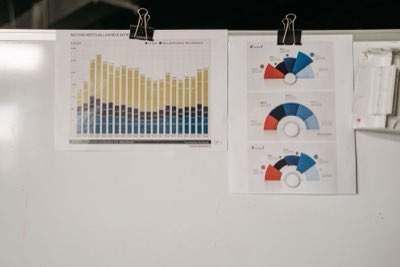
* The industry's reach is massive: As of 2016, Japanese animation accounted for 60% of the world's animated television shows. * Success is measurable: In 2024, *Jujutsu Kaisen* broke the Guinness World Record for the "Most in-demand animated TV show," with a global demand rating 71.2 times higher than that of the average TV show. * The market is growing: The anime industry was projected to reach a value of $30 billion by 2030, reflecting the massive investment in high-level creative direction.
However, we must acknowledge that a director's power is not absolute.
The Limits of Creative Control
A heavy rain begins to fall against the studio window, dimming the light in the room. A director stares at a budget sheet, the red ink marking where the creative vision exceeds the available funds.
It is important to recognize that a director does not work in a vacuum. Their power is constantly checked by the production committee, which oversees the financial investment, and the practical limitations of the studio's staff and technology.
A director may want a cinematic, high-budget fight scene, but if the budget is tight, they must find creative ways to imply motion without expensive animation.
Furthermore, the role is not always about personal expression. Often, a director is hired specifically to execute someone else's vision or to work within a very rigid franchise identity.
This tension between art and commerce is the constant reality of the industry.




Comments 0